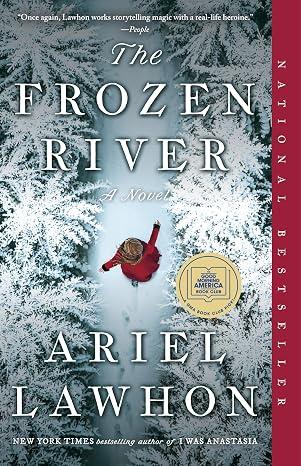
Story in Brief
Spoiler-FreeSet in Hallowell, Maine, in 1789, The Frozen River follows Martha Ballard, a midwife whose knowledge of birth, death, illness, and family secrets gives her unusual authority in a small community. When a man is found dead in the frozen Kennebec River, Martha is drawn into a murder investigation that tests what people are willing to say aloud, what they are determined to hide, and whose version of the truth is allowed to stand.
A spoiler-free book club review of The Frozen River by Ariel Lawhon, including who should read it, what makes it discussion-worthy, content notes, and whether it is a good book club pick.
Who Should Read This
Themes to Discuss
Full Review
Why this one works
Based on a real historical figure, The Frozen River blends historical fiction with mystery, courtroom tension, and a thoughtful portrait of women's work. That mix makes it especially useful for a book club, because readers can enter the conversation through plot, character, marriage, justice, or historical detail without the discussion feeling scattered.
Some readers will want to focus on the investigation itself. Others will be more interested in Martha's marriage, the women around her, or the way the town decides whose testimony matters. That breadth is a strength. It gives the room more than one natural way into the conversation.
The novel also creates a strong bridge between domestic life and public power. It asks what happens when lived truth collides with official systems that would prefer silence. That usually leads to a more layered discussion than a mystery that stays only at the level of plot.
Host tip
If your group has a wide range of reading tastes, begin with Martha, the setting, and the relationships before moving into law, power, and community silence. The personal stakes are often what gets everyone talking first.
What Makes It Good for Book Clubs
The Frozen River gives book clubs several natural discussion paths: how truth is recorded, how justice is shaped by power, and how women preserve knowledge even when official systems dismiss them.
Martha's role as a midwife opens up rich conversation about trust, caregiving, marriage, reputation, and the difference between what a community knows privately and what it is willing to admit publicly.
The mystery gives readers plenty to talk about, but the strongest conversations often come from Martha's moral choices, the silences around women's suffering, and the question of who gets believed.
How the Discussion Might Feel
Book Club Difficulty Level
Moderate | A good fit for groups that want emotional depth without a heavy lift.