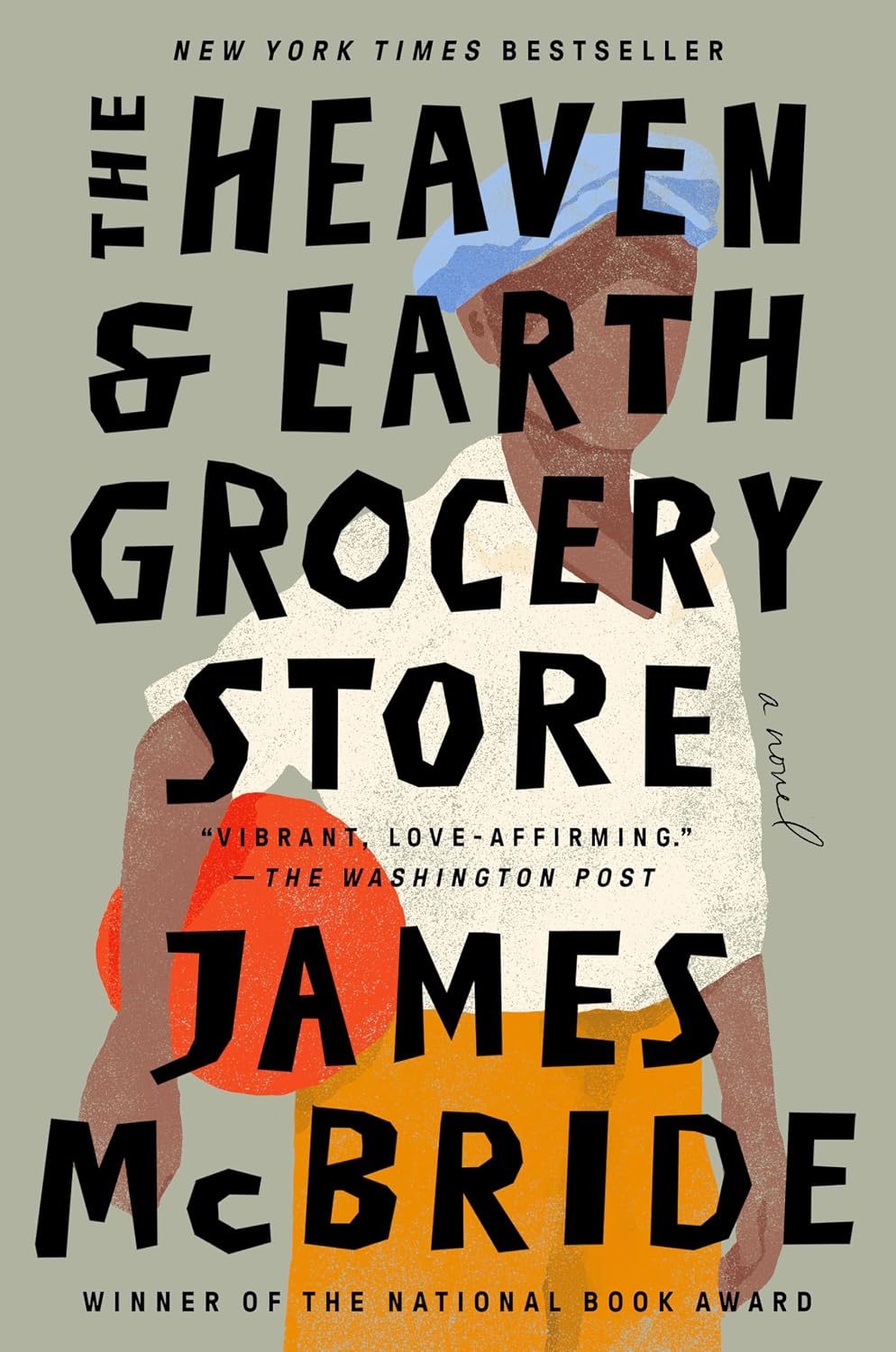
Story in Brief
Spoiler-FreeThe Heaven & Earth Grocery Store begins in 1972, when workers digging foundations in Pottstown, Pennsylvania, find a skeleton at the bottom of a well. The story then opens into Chicken Hill, a neighborhood where immigrant Jews and African Americans live side by side, and where Moshe and Chona Ludlow's Heaven & Earth Grocery Store becomes part of the community's moral center. As the novel traces secrets, care, injustice, and survival, it follows people on the margins protecting one another from institutions and neighbors who would rather look away.
A spoiler-free book club review of The Heaven & Earth Grocery Store by James McBride, including who should read it, what makes it discussion-worthy, content notes, and whether it is a good book club pick.
Who Should Read This
Themes to Discuss
Full Review
Why this one works
The Heaven & Earth Grocery Store gives book clubs a lot to discuss because it blends community portrait, moral tension, humor, and historical weight in a way that invites readers to notice both the big injustices and the small acts of care that keep people going.
It also works well for mixed groups because there are many entry points. Some readers will focus on the neighborhood, others on the central mystery, and others on the novel's larger questions about who gets protected and who gets forgotten.
Host tip
If your group includes readers who get overwhelmed by large casts, start with Chicken Hill as a place and the question of community before moving into the specific secrets and harms in the story. That gives everyone a steadier on-ramp.
What Makes It Good for Book Clubs
The Heaven & Earth Grocery Store gives book clubs several rich discussion paths: how communities care for their most vulnerable members, how racism and prejudice shape daily life, and what ordinary people risk when they choose kindness over self-protection.
The book is also excellent for groups that like to talk about place. Chicken Hill feels alive because it is shaped by work, faith, gossip, music, food, fear, generosity, and the complicated closeness of neighbors who know one another's business.
There is also a strong moral question at the center of the novel: when institutions fail people, what responsibilities do neighbors have to one another?
How the Discussion Might Feel
Book Club Difficulty Level
Deep | Best for groups willing to discuss heavier themes, moral tension, and difficult social questions.