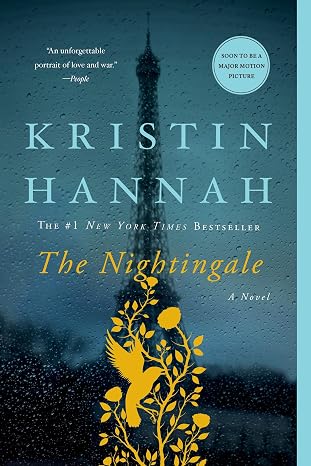
Story in Brief
Spoiler-FreeThe Nightingale follows two sisters, Vianne and Isabelle, as they face the German occupation of France during World War II. In the quiet village of Carriveau in 1939, Vianne is a wife and mother trying to protect her daughter and survive under impossible pressure, while Isabelle is younger, restless, and drawn toward active resistance. As the war changes their homes, relationships, choices, and sense of safety, both women are forced to decide what courage looks like when survival itself becomes a moral challenge. The novel is emotional, sweeping, and centered on women's roles in wartime.
A spoiler-free book club review of The Nightingale by Kristin Hannah, including who should read it, what makes it discussion-worthy, content notes, and whether it is a good book club pick.
Who Should Read This
Themes to Discuss
Full Review
Why this one works
The Nightingale gives book clubs a lot to discuss because it combines a powerful sibling relationship with the moral pressure of wartime survival. The book is emotionally direct, which makes it easy to enter and hard to forget.
It also works well for groups that want to talk about history through women’s experiences. The novel makes courage feel complicated rather than heroic in a simple way, and that tends to lead to a very real conversation.
Host tip
If your group includes readers who are sensitive to war trauma, sexual violence, or child danger, say that up front. This is a better pick for serious conversation than for a light meeting.
What Makes It Good for Book Clubs
The Nightingale gives book clubs several clear discussion paths: what courage looks like in different forms, how war changes ordinary moral choices, and how sisters can love each other deeply while misunderstanding each other for years. The contrast between Vianne and Isabelle is especially discussion-friendly. One sister's courage is tied to endurance and protection, while the other's is tied to action and resistance, giving readers room to talk about which kinds of bravery are most visible and which are most easily overlooked. The novel also invites conversation about women's history. It asks readers to consider how women's sacrifices are remembered, ignored, or simplified after war.
How the Discussion Might Feel
Book Club Difficulty Level
Deep | Best for groups willing to discuss heavier themes, moral tension, and difficult social questions.